As December rolls around, temperatures begin to climb, rainfall becomes less reliable, and the lush green landscapes we’ve enjoyed throughout spring start to change.
For many, summer means Christmas celebrations, holidays, and afternoons in the sunshine. But for the team at Durban Landscaping & Garden Maintenance, it also means an increased focus on fire preparedness, vegetation management, and monitoring grassland curing.
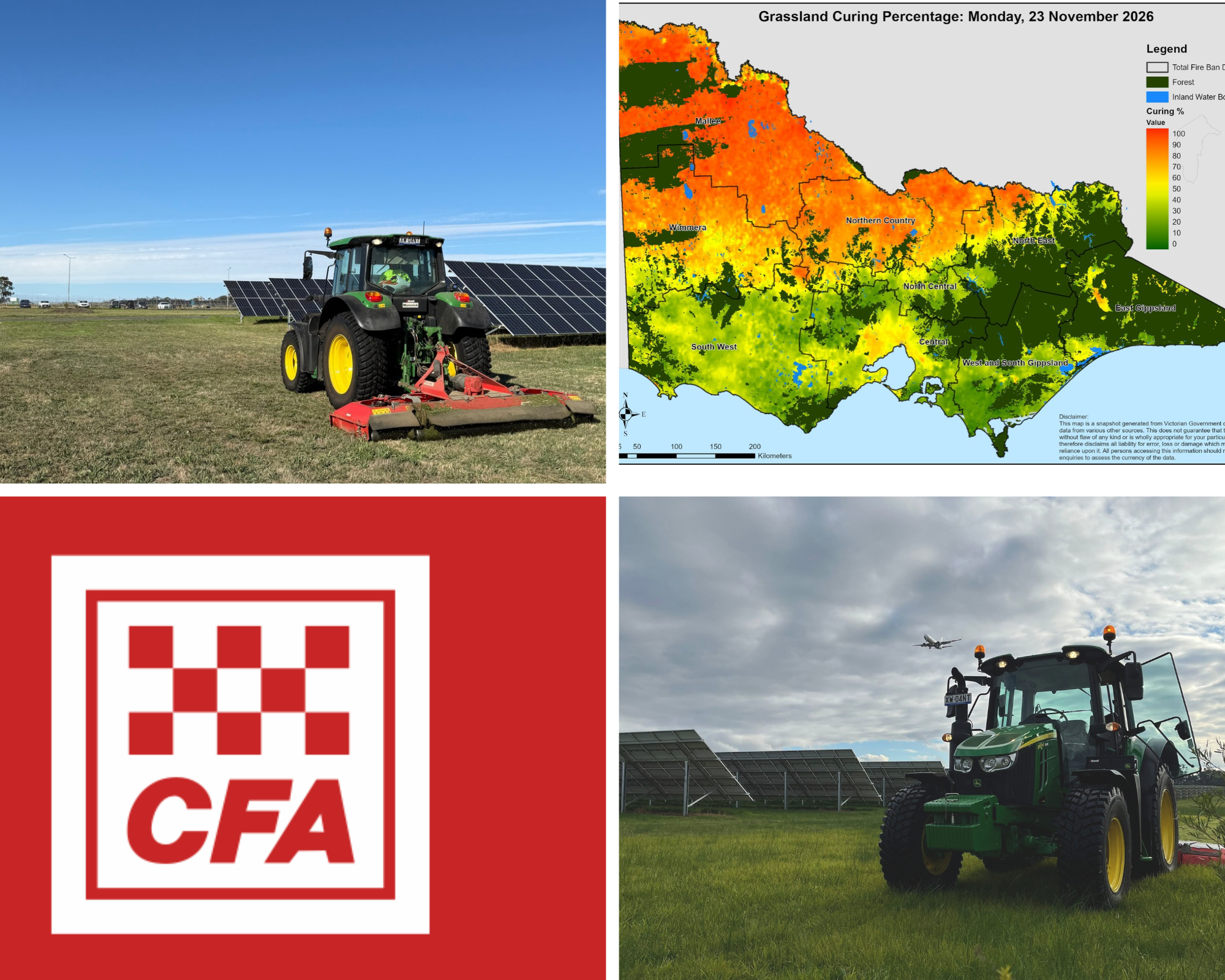
Leading into summer, Durban undertakes fire curing assessments and reporting to help identify changing vegetation conditions and support proactive fire risk management across relevant commercial landscapes.
Because when it comes to fire preparedness, getting ahead of the risk is far better than reacting to it.
What Is Grassland Curing?
Have you ever noticed how quickly Victoria’s green paddocks, roadside verges, and open grasslands turn golden brown as summer approaches?
That natural process is known as grassland curing.
As grass matures, dries out, and loses moisture, it becomes increasingly combustible. The greater the proportion of dead and dried vegetation, the more readily grass can contribute to the ignition and spread of fire.
Grassland curing is expressed as a percentage, ranging from:
-
0% cured: Entirely green, living grass.
-
25% cured: Predominantly green grass with some dead material.
-
50% cured: Approximately equal proportions of living and dead grass.
-
75% cured: Predominantly dry, dead grass with some green vegetation remaining.
-
100% cured: Entirely dead or dried-out grass.
The Country Fire Authority (CFA) uses regular grassland curing observations across Victoria to help inform its understanding of grassfire risk throughout the fire season.
However, curing is only one factor. Temperature, wind, humidity, fuel loads and surrounding conditions also influence fire behaviour.
What Goes Into Durban’s Fire Curing Reports?
There is much more to fire preparedness than simply mowing a paddock or slashing a roadside.
Fire curing reports help build a picture of how vegetation is changing over time, allowing maintenance activities to be planned around actual site conditions rather than relying solely on the calendar.
Key considerations include:
-
The estimated percentage of grassland curing.
-
Vegetation height, density and fuel loads.
-
Changes in vegetation since previous observations.
-
Areas drying out faster than others.
-
Accumulation of dead vegetation and organic debris.
-
Proximity to buildings, roadways, infrastructure and other assets.
-
Photographic evidence to assist with monitoring seasonal changes.
-
Recommendations for vegetation management and follow-up works.
This information supports informed conversations with our clients and helps establish priorities as environmental conditions change throughout summer.
Timing Is Everything
When it comes to fire mitigation, knowing when to undertake vegetation management can be just as important as knowing where.
Slashing too early can result in additional grass growth before peak summer conditions arrive, potentially requiring further maintenance. Leaving vegetation management too late can increase exposure to dry fuel loads and restrict when machinery can safely operate.
Transport Victoria also uses grassland curing information to help determine appropriate timing for roadside mowing and slashing programs.
By monitoring vegetation conditions, we can better inform the scheduling of mowing, slashing, weed management and fuel reduction activities, while considering weather conditions, environmental sensitivities and applicable fire restrictions.
It’s about working smarter, not simply working harder.
Protecting Critical Infrastructure
For Durban, fire preparedness is particularly important across large commercial precincts and complex operational environments such as Melbourne Airport.
With extensive grasslands, roadside reserves, open spaces, commercial buildings and critical infrastructure, vegetation management plays an important role in supporting the broader safety and operational requirements of these environments.
Our responsibility extends beyond presentation. It includes recognising potential hazards, communicating changing site conditions, and working collaboratively with stakeholders to support proactive risk management.
A neatly maintained landscape might look great, but understanding the environmental conditions behind it is equally important.
Safety Doesn't Take a Summer Holiday
While many people are preparing to switch off for the Christmas break, our crews are preparing for some of the most challenging working conditions of the year.
Hot weather, dry vegetation and changing fire danger levels mean our teams must remain particularly vigilant.
Fire season preparations also involve considering machinery maintenance, potential ignition sources, emergency preparedness, daily risk assessments and ensuring works are undertaken only when conditions and applicable restrictions allow.
At Durban, Safety is one of our five core values, and our approach to fire preparedness is another example of how that value translates into everyday operations.
No maintenance task is more important than the safety of our people, clients, infrastructure and surrounding communities.
Proactive, Not Reactive
Fire curing reports are another example of the work Durban undertakes behind the scenes that many people never get to see.
They represent the observation, planning, environmental awareness and professional judgement that go into responsible commercial grounds maintenance.
As an ISO-certified business in Quality, Environmental, and Occupational Health and Safety Management, we understand the importance of identifying risks early, documenting changing conditions and making informed decisions.
We cannot control Victoria's weather, but we can control how well we prepare for it.
And as we head into another Australian summer, our commitment remains the same: protecting people, caring for landscapes and supporting safer environments through proactive maintenance.
Until next time — keep your cool, stay fire-aware, and remember that a little preparation today can make a world of difference tomorrow.