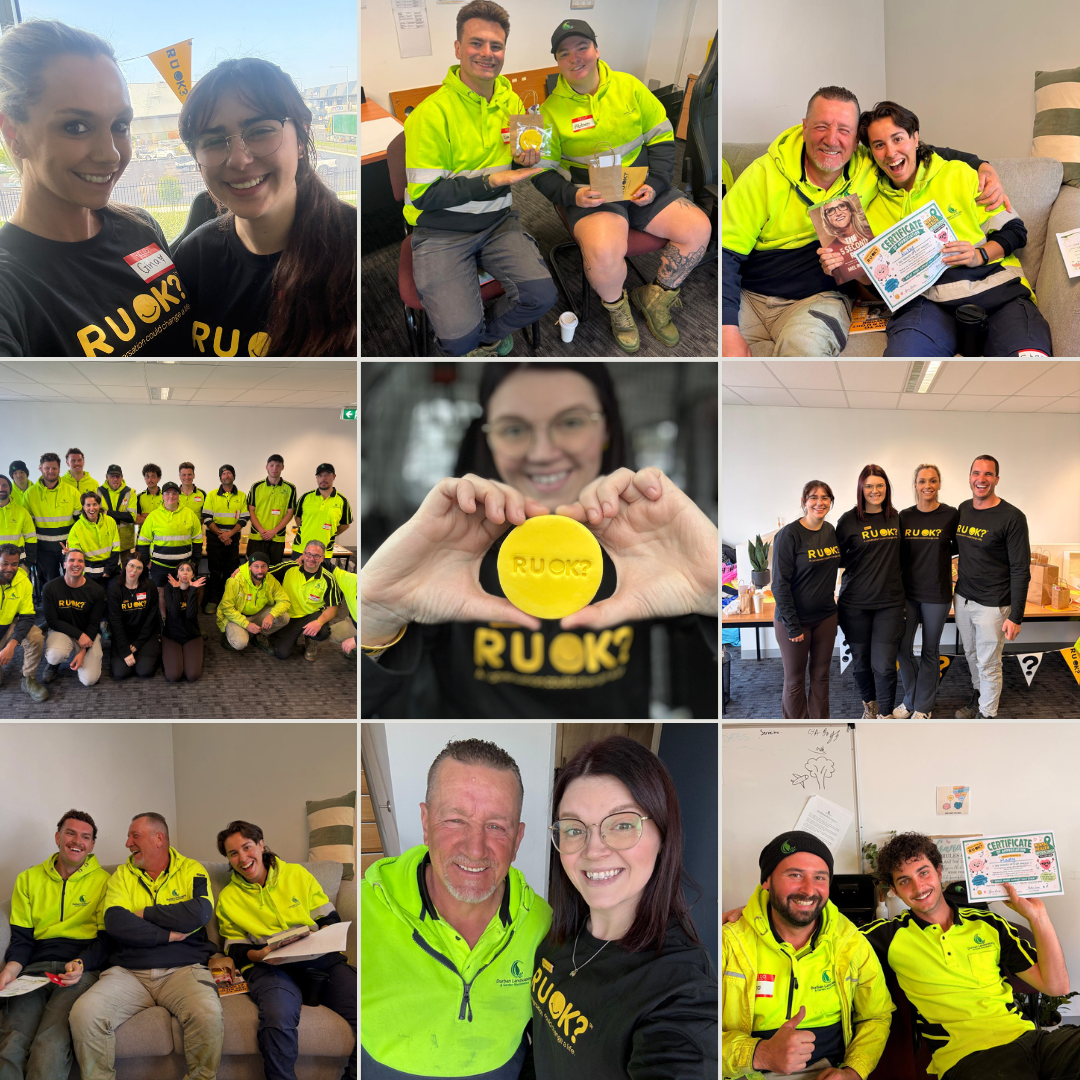
At Durban Landscaping & Garden Maintenance, we spend a huge amount of our week together — on site, in vehicles, at the depot, and on the phone. So for R U OK? Day 2026, we wanted to do something that felt real, useful, and very Durban.
This year’s workshop was built around the theme “Build a Healthier Mind Together”, with a focus on getting to know each other better, recognising when someone might not be themselves, learning simple mental health tools, and making it easier to check in with a mate without making it awkward.
And yes — there were plenty of laughs along the way.
Getting to Know the People Behind the Hi-Vis
We kicked things off with a set of conversation cards designed to get everyone talking beyond the usual work chat.
Questions ranged from “If you could bring back one influential person, who would it be and why?” to “What advice would you give your younger self?”, “If you were a tour guide for aliens, where would you take them?” and “What helps you cope when you’re feeling angry or frustrated?”
The mix of fun, reflective, and slightly random questions helped everyone open up, share a little more about themselves, and learn things about their teammates they probably never would have discovered during a normal workday.
The answers were funny, thoughtful, and sometimes completely unexpected — which was exactly the point.
It gave everyone a chance to learn something new about the people they work beside every day and helped create genuine conversations in a relaxed way. Because the better we know each other, the easier it becomes to notice when someone seems a little quieter, more stressed, or just not themselves.
Sometimes supporting someone starts with something as simple as knowing them well enough to notice a change.
Notice. Ask. Listen. Check In Again.
We also talked about the small behavioural changes that can sometimes show up when someone is struggling — like becoming quieter, tired, distracted, withdrawn, or unusually frustrated. The goal wasn’t to diagnose anyone. It was to reinforce four simple actions:
NOTICE → ASK → LISTEN → CHECK IN AGAIN.
We also introduced TIACS and discussed why some people may feel more comfortable speaking anonymously to someone outside work, friends, or family.
The team then had an open conversation about what might stop someone from saying they’re struggling — and what we can do as a workplace to make those conversations easier.
That part mattered, because culture works best when the team helps shape it.
How Full Is Your Battery?
One of the most meaningful activities of the day was “Fill Your Battery.”
Everyone was asked to think about how full their battery felt, what drains it, what recharges it, and one thing they could do more often.
It opened up some great conversation around what self-care actually looks like.
And no, it isn’t always a spa day or a holiday.
Sometimes self-care is getting enough sleep (or taking a much needed nap), taking your lunch break, spending time with family, exercising, saying no, taking 5 for yourself, switching off from work, asking for help — or doing absolutely nothing for a while.
That was a pretty good reminder for all of us.
The R U OK? Challenge
Then came the practical part.
Everyone paired up and practised how they would check in with a workmate who seemed stressed or quieter than usual.
The challenge?
Ask naturally — not like HR, just simply start a conversation!
Sometimes a simple:
“Mate, you’ve seemed a bit off lately. Everything alright?”
is enough to open the door.
We reinforced the four simple steps:
ASK → LISTEN → ENCOURAGE ACTION → CHECK IN.
And perhaps the most important reminder of all — you don’t need to fix someone’s problem. Sometimes just being there and listening is enough.
What Makes a Good Day at Durban?
Throughout the workshop, the team also contributed to our “What Makes a Good Day at Durban?” board.
Good communication. Good music. Teamwork. Feeling appreciated. Having a laugh. Organised runsheets. Good vibes. Coffee. No drama.
It gave everyone a chance to contribute to what workplace wellbeing actually looks like to them — not what a policy says it should look like.
DRUM ROLL...
Of course, we couldn’t finish without recognising two people who absolutely showed up and gave the workshop 100%.
A huge congratulations to Ruby and Matty, our standout participants for the day.
They got involved, contributed, listened, had a laugh, and brought exactly the kind of energy we hoped for.
As a little reward, they each walked away with an Endota gift card and a copy of The 5 Second Rule by Mel Robbins— a fitting prize for a day all about mindset, confidence, self care, and taking positive action.
True Durban Legends!
Why Days Like This Matter
R U OK? Day is important, but the message can’t stop when the workshop ends.
We don’t expect our team to suddenly become mental health experts. That isn’t the goal. If the day helps us become a little better at looking after ourselves, noticing when a teammate isn’t quite themselves, or feeling comfortable enough to ask someone if they’re okay — then it has done exactly what it needed to do.
At Durban, we want our people to know that support, conversation, and connection are part of the culture — not just something we talk about once a year.
And if we can learn something useful, get to know each other better, and have a few laughs while doing it, even better.
Until next time — keep checking in, keep listening, and keep showing up for your people!